The Symbolism & History of the Statue of Liberty
Why was the Statue of Liberty built?
The Statue of Liberty was conceived to commemorate the enduring friendship between the United States and France and to celebrate their shared values of liberty and democracy. It also served as a beacon of hope for immigrants arriving in the United States.
The story behind it
In the late 19th century, French sculptor Frédéric Auguste Bartholdi envisioned a monument embodying the spirit of liberty. Working with French historian Édouard René de Laboulaye, Bartholdi designed the statue as a colossal neoclassical sculpture, drawing inspiration from ancient Roman goddesses.
Why is it called Lady Liberty?
“Lady Liberty” is a colloquial nickname emphasizing the statue's feminine attributes and its role as a symbol of freedom and enlightenment. She isn't modeled on a specific person, though some historians point to the ancient Roman goddess Libertas as an influence.
The symbolism
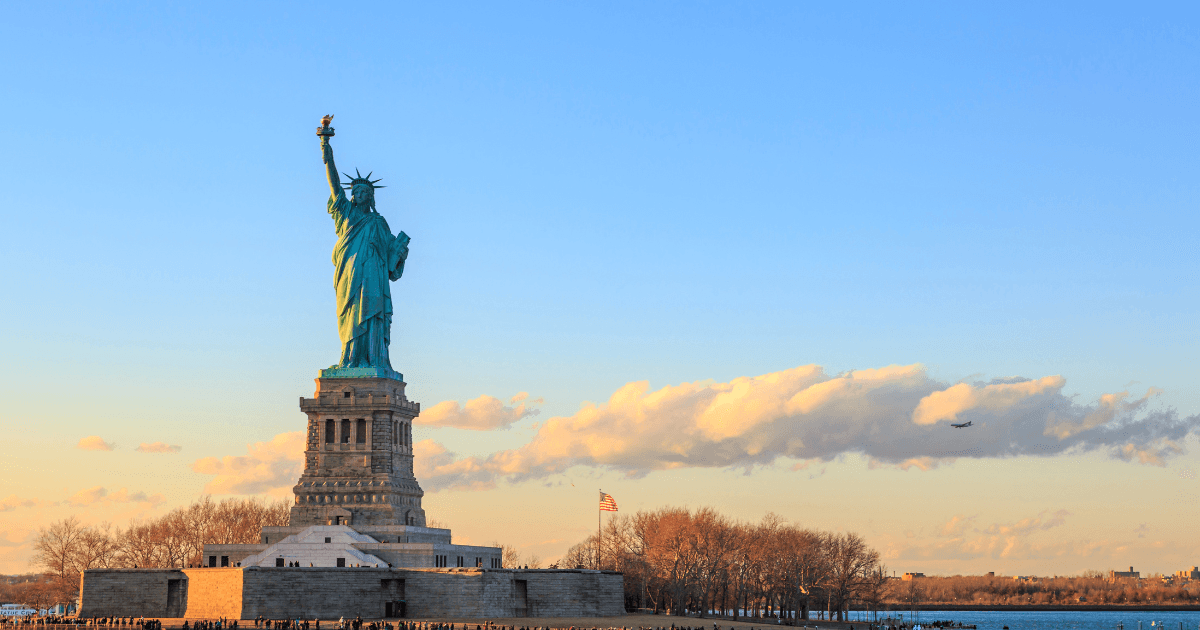
- The seven rays on her crown represent the seven continents — freedom's universal reach
- The broken chains at her feet symbolize liberation from oppression and tyranny
- Her torch represents enlightenment and the path to a brighter future
- Her toga references classical Greco-Roman tradition and the roots of modern democracy
Her motto
The pedestal bears a plaque with lines from “The New Colossus” by Emma Lazarus — most famously, “Give me your tired, your poor, your huddled masses yearning to breathe free.” It's the line that made the statue a welcoming symbol for immigrants arriving by sea.